Another Great Reset
You’ve probably heard about the Great Reset — or at least seen memes about it.
But here’s my proposal for a real reset: one that actually addresses the root problems.
Table of Contents
- The Problem with the Current Agenda
- Why We Must Return to the Big Water
- Rethinking City Locations
- Economic and Cultural Ties Over Borders
- New Architecture
- New Workplaces and Economies
- New Food
- More Recycling, Reusing, and Reducing
- New Ways of Manufacturing
- Challenges and Flaws
- Conclusion
The Problem with the Current Agenda
Yes, the WEF’s goals — greener living, smarter growth — sound good. But they don’t address the root of the problem, and they don’t “reset” much.

The Great Reset meme — internet culture has embraced and parodied the concept.
Why We Must Return to the Big Water
We should rebuild our way of life around big navigable rivers, lakes, seas, and oceans.

The “You will own nothing and be happy” narrative — another source of debate and memes.
Reasons:
- Vital water supply for agriculture, industry, and daily life
- Desalination as a solvable challenge
- Essential shipping routes for cargo and passengers
- Recreational and tourism potential
- Aquaculture to feed growing populations
Rethinking City Locations
Cities without access to major water sources should be abandoned or repurposed.
Examples: Soviet-era cities in the steppe built for a single industry.
Vacated land can be:
- Forests, parks, reserves
- Wildlife sanctuaries
- Indigenous territories
Sustainable cities should:
- Grow bigger, stronger, and taller
- Be built as waterfront stripes or on islands/floating structures

Megaregions of the USA — many have stronger ties to regions across borders.
Economic and Cultural Ties Over Borders
Borders often hinder natural economic flows.
Some cities should:
- Become city-states
- Merge with nearby regions across borders
- Break away from unsuitable national structures
New Architecture
- Arcologies and mega-towers
- Use local and recycled materials
- Maintain high-rise living standards equal to private homes
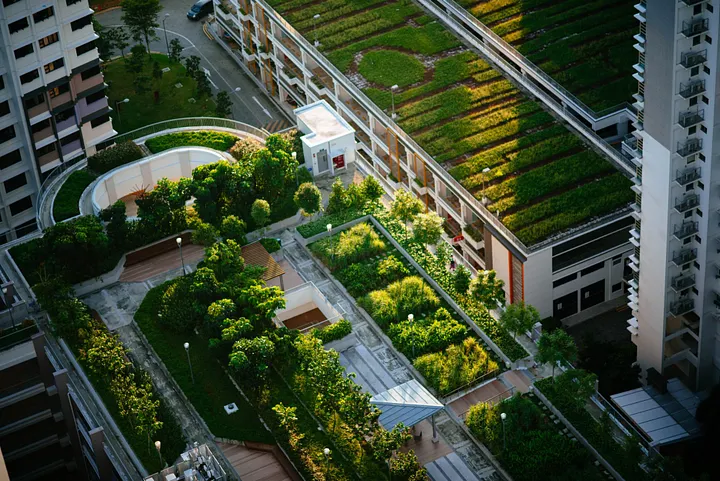
- Encourage urban rooftop gardens

Urban gardens on rooftops improve sustainability and city livability.
New Workplaces and Economies
- Strengthen green and blue economies
- Build or upgrade airports, railroads, ports
- Increase business opportunities via population density near coasts

Examples of blue economy-related industries.
New Food
We must diversify crops and seafood:
“75% of the global food supply comes from only 12 plant and five animal species” — WWF Report

Diversity in food crops is essential for long-term sustainability.
Climate change threatens biodiversity: More info
More Recycling, Reusing, and Reducing
- Use plastics only for special purposes
- Turn biodegradable waste into biogas and fertilizer
- Encourage conscious consumption
- More on reuse vs recycling

More “R” — rethink, reduce, reuse, recycle, and repair.
New Ways of Manufacturing
- Build products locally with local materials
- Use CNC machines, 3D printers, and modern manufacturing tools
- Reduce dependence on imports
Challenges and Flaws
- Risk of conflict over new borders
- Bureaucratic restrictions (e.g., UN ban on artificial island states)
- Ecological impacts of increased coastal populations
- Technological challenges (e.g., corrosion from saltwater)
- Sea-level rise and climate change impacts
- Overpopulation in some suitable cities
- Natural hazards (e.g., tsunamis, rogue waves)
Conclusion
This Great Reset plan focuses on sustainable urban planning, resource management, and economic realignment — rooted in living with and from the water.
Thanks for reading!